This blog offers a discussion of the possibilities of visual media and technology for health,education, communication and political action. Periodically, this blog is a collaborative effort with graduate students in public health at Hunter College, some of whom serve as guest bloggers and some of whom create their own blogs.

Tuesday, June 13, 2006

Kenneth Cole, KFF, Webcast Event


Today, Tuesday, June 13, the Kaiser Family Foundation will host a live webcast event with AIDS activist, Kenneth Cole as part of “Kaiser Conversations on Health,” an ongoing interactive program designed to elevate public debate of significant health issues. Submit questions for Kenneth Cole in advance of the live program at conversations@kff.org.

WHO: American fashion designer, humanitarian and president and chief executive officer of Kenneth Cole Productions, Inc., Kenneth Cole, has been at the forefront of AIDS activism since 1985 when he allocated his company's entire advertising budget to a campaign featuring an Annie Leibovitz photo of eight well-known models posing barefoot with a group of children to support the American Foundation for AIDS Research (amfAR). He joined amfAR's Board of Directors in July 1987 and became Chairman of the Board in 2004. In addition to Board leadership, Cole designs and donates most of amfAR’s annual advertising creative and every year donates a portion of his company’s retail sales on World AIDS Day to amfAR. Cole continues to fight HIV/AIDS, most notably with the recent "We All Have AIDS" campaign.

WHAT: Kenneth Cole talks with Kaiser Family Foundation Vice President Jackie Judd and a live audience, reflecting on his AIDS activism work and strategies for success.

WHEN: Tuesday, June 13 at 12:00 p.m. ET.

WHERE: Watch the live webcast on kaisernetwork.org.
http://cme.kff.org/Key=10987.GWB.C.D.F81nFH

HOW: Submit questions for Cole in advance of the live program at conversations@kff.org.

The archived webcast of this event will be available at 5:00 p.m. ET. In addition to the archived webcast, kaisernetwork.org provides the transcript, podcast, and links to related resources.

Please note: The program is accessible via webcast. If you have never viewed a webcast before, please test your media player in advance of the live webcast.
http://www.kaisernetwork.org/health_cast/hcast_howto_view.cfm

Monday, June 12, 2006

"If you see someone on a cell phone...."


If you see someone with a cell phone, what do you think of them? Who do you guess they're talking to, and about what? Over the weekend, a friend of mine was in town and was using her photo-enabled cell phone to blog her trip. I guess that's part of what's got me thinking about cell phones today.

There are several bits in the news that have me thinking about cell phones and mobile computing. Here in NYC, there's an on-going story about public school restrictions on cell phones. And, in today's NYTimes there's a piece about the use of higher-range ring tones that, according to the article, younger people can hear but older people can't hear. What struck me about the coverage of this is the way adolescents are likened to other-than-human-creatures, like dogs, with special hearing.

This is via Rich Ling, and a forwarded email listserv posting. There's another news story on MSNBC and in Newsweek that caught my attention as well. The focus of the article is about the war in Iraq, and how you discern who is a threat, and what caught my eye was this quote:

"If you see someone with a cell phone," said one of the commanders, half-jokingly, "put a bullet in their f---ing head."

Here, people with cell phones are seen as a particular kind of threat, not unlike the public school kids in NYC are viewed.

Any time there's technological innovation, there are unintended consequences that follow. Howard Rheingold has an interesting piece from a couple of years ago comparing the development of mobile computing via cell phones with the other sorts of technological innovation, like the automobile. Some of the unintended consequences he talks about in this piece are about how technology has influenced mating and dating patterns, which certainly has some relevance for public health.

I wonder, too, about the unintended consequences of "Othering" and new technology, and I worry about the unintended consequences of mobile computing for forces that want to destroy civil liberties and human life.

Friday, June 09, 2006

MTV and KFF Sponsor Video Blogging Contest about HIV/AIDS


I received this, dated June 5, from Julia Davis at The Kaiser Family Foundation (KFF) today, and wanted to pass it long. The partnership between KFF and MTV has been remarkably successful, and is a real benchmark for anyone interested in public health campaigns that target a large youth audience.

"Today, think MTV and the Kaiser Family Foundation – as part of their think: Sexual Health campaign and with support from the National Alliance of State and Territorial AIDS Directors (NASTAD), iFilm and WebMD – announced the creation of think HIV, the first ever multi-platform, interactive community for this first generation of Americans who have lived their entire lives during the AIDS epidemic. The initiative seeks to provide a platform to foster dialogue and active engagement on the topic of HIV/AIDS and especially its impact on young people, as well as provide information and resources to young people about HIV/AIDS. According to UNAIDS, half of new HIV infections worldwide are among those under the age of 25.

“The MTV audience has never known a day without HIV, and young people around the world are at the center of the epidemic,” said Brian Graden, President of Entertainment for MTVN Music Group and President of Logo. “We have a long history of educating and empowering our audience on this issue, and while progress has been made, there is still work to be done. think HIV will offer our viewers a new, interactive and safe place to learn about and fight it.”

“By utilizing the latest media technologies, think HIV gives voice to a generation of young people about a topic that deeply affects them in unique and powerful ways,” said Tina Hoff, Vice President and Director of Entertainment Media Partnerships for the Kaiser Family Foundation. “A core tenant of work has always been to go where young people go to reach them with information and this new joint venture brings us into the new age of media.”

think HIV will feature the following components:

* think HIV Online Community – think HIV online will serve as an interactive community that will launch following the premiere of the “THINK HIV” documentary on August 18th. The site will be an engaging and interactive, safe space for young people to share their personal stories through videos, photos and blogs and text about HIV/AIDS. The user-friendly site will also provide easy access to information and resources about HIV/AIDS including prevention and testing as well as how to get involved in the global fight – including access to health information, resources and the online community at WebMD. Visitors will be able to upload their videos to the site via software from iFilm. The Alive at 25 HIV Vlogging Competition winners will be featured on the site with official state information about HIV/AIDS, links to local services, and key resources for young people developed in partnership with NASTAD members.

* Alive at 25 – National HIV Vlogging Competition – Beginning June 5th and running until June 30th, young people ages 13-25 from around the country are encouraged to submit essays of 250 words or less at think.mtv.com on why they should be selected as the exclusive think HIV vlogger (video blogger) for their state. One winner will be selected from each state by Kaiser, MTV and NASTAD, and will be given a video camera to vlog about what HIV/AIDS means from their unique perspective. Vlogs will go live on the think HIV website on August 18th. One vlogger will be awarded a grand prize VIP trip to the MTV studios in New York, and earn the opportunity to showcase their vlog on MTV. For details about the competition visit www.think.mtv.com.

* THINK HIV Documentary – MTV News & Docs – in partnership with Kaiser – will produce “THINK HIV,” a documentary in which young people themselves tell the story of how their generation has been impacted by the virus. Part memorial, part testimony, these short vignettes filmed entirely by infected or affected young people will paint a raw, intimate, and informative portrait of the epidemic’s impact on their lives. The half hour show will premiere on MTV on August 18th — the last day of the International AIDS Conference in Toronto.

think HIV builds on both MTV and Kaiser’s long-term commitment to educating and empowering young people in the fight against HIV/AIDS, in part through their 10-year partnership, currently called think: Sexual Health. To date, the Emmy and Peabody Award winning partnership has garnered more than 100 million viewers to its documentaries, 1.2 million calls to the toll-free hotline (1-888-BE-SAFE-1), and has distributed more than 450,000 informational guides. More than two out of three think: Sexual Health campaign viewers are more likely to use condoms, talk to their partner about safer sex, and to get tested for HIV or other STDs."

Class Blogs ~ Honorable Mentions


Coming to the end of the first week of Summer session, I wanted to take a few minutes to bring attention to some folks who are quickly getting the hang of blogging.

First, in terms of the assignment to "blog everyday" even though there have been groans and sobs (possibly the gnashing of teeth), lots of people have been able to do this, including: Cris, Beatriz, Kezzie, Steffie, Tara, Mary and Matt.

Second, in terms of content, I wanted to recognize a few people who are getting the hang of both the blogger interface and the task of creating health-focused content. Take a look at Tara's blog about alternative health, Cris's blog about diabetes disease management, and Kezzie's blog about women's health (and her impressive tech-skill at adding a video component!).

Finally, if you're still struggling in the class, you might seek out one of these classmates for help on getting up to speed.

Teleshrink


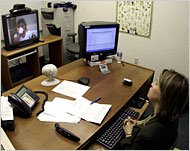
There's an interesting article in yesterday's New York Times about the practice of therapy by remote, technological set up.

What struck me about the article was this snippet:

"Basically, doctors can do, surprisingly, almost everything," said Don McBeath, the director of telemedicine and rural health at the Texas Tech University Health Sciences Center in Lubbock. "The difference is they can't touch you or smell you."

Dr. Gibson said the lack of smelling and touching, at least when it comes to psychiatry, has proved to be a good thing. Being physically in the presence of another human being, she said, can be overwhelming, with an avalanche of sensory data that can distract patient and doctor alike without either being aware of it.

"Initially we all said, 'Well, of course it would be better to be there in person,' " she said. "But some people with trauma, or who have been abused, are actually more comfortable. I'm less intimidating at a distance."


This is completely counter to what I would have expected. To me, it would seem that therapy would be more effective in person. I was surprised to find that some patients and clinicians actually prefer remote counseling to face-to-face.

Thursday, June 08, 2006

Wondering What a Blog is, Anyway...?

If you're still a little perplexed by what a blog is, and what the term "blogosphere" means, there's a terrific post by Andy Carvin, another technology activist at Learning.Now, that explains it all for you.

Wednesday, June 07, 2006

How to Make Best Use of Class Time


As we discussed on Monday, each class time will start with a "practicum," that is a period of hands-on practice posting to your blog, commenting on classmates' blogs, the course wiki, and preparing your in-class presentation. Of these, the priority should be posting to your own blog, then reading and commenting on others' blogs.

This is also a time to get to know your classmates, share knowledge with them, ask questions.

As a third use of your time, you can use this time to check in with me, ask me questions about things you couldn't solve on your own.

Tuesday, June 06, 2006

Digital Divides and Community Activism


One of the things we'll be discussing in this class is the "digital divide," which is usually defined as "the gap between those people with access to communications and technology tools nd those without it."

For those of you interested in this topic, I wanted to pass long some excellent resources for learning more about what this means. In addition to the recent reports on the digital divide that I have linked above, you should also familiarize yourself with The Digital Divide Network (DDN). The DDN offers a tremendous wealth of information on their website, and they also have a fairly robust listserv (email list) that you can sign up for. If this is an area that you want to learn more about, I strongly encourage you to subscribe.

From your introductions to each other last night, I gleaned that many of you have a strong committment to social justice and community activism. So, it might interest you to learn that there are lots of people are activists around technology and issues of unequal access to technology, and of course, they have blogs! Check out this blog, by community technology activist in Ohio, Angela Stuber. I learned of her work, and her blog, through the DDN listserv.

Blogroll For Summer

We have a good group for the Summer I session, and I've posted the "blogroll" (list of blogs). Please take some time between now and the next class to go through and meet your classmates, leave a comment, and get acquainted.

Monday, June 05, 2006

First Meeting of Summer I Course


Today is the first meeting of the Summer I Course. We'll cover a lot of ground tonight, so come prepared to stay the entire time. Also, please review the course materials already posted on Blackboard, and take a few minutes to scroll back through the previous entries on this blog.

Tuesday, May 23, 2006

Credibility Commons


There's some really interesting new research out about credibility of information online:


"Two university researchers, along with a team of experts, are working on a technology that would allow users to assess the credibility of information they find through web searches.

Michael Eisenberg, professor and dean emeritus at the University of Washington, and David Lankes, an associate professor at Syracuse University, received a grant to establish a web site called the Credibility Commons. The site aims to provide computer programs and tools to help users more easily find credible information online.

The Credibility Commons arose out of a conference hosted by the University of Washington's Information School and sponsored by the American Library Association's Office of Information Technology Policy, with funding from the MacArthur Foundation. The conference centered on the credibility of internet information. Participants--who included experts from libraries, education, and other communications fields--sought to determine the scope of the problem, define the existing state of knowledge on the topic, and develop practical steps to address the credibility of information found through web searches.

Eisenberg said his team would like to provide different search capabilities and have educators and others try them out and offer feedback. "Google's page ranking has to do with who else links to that site, and it's quite good related to topic, but no one has done that on the dimensions of credibility," he said. "How do we have those credible sites come up first?"

He added: "Librarians have question-and-answer services, or 'Ask a &' services, where people can contact them and get a response back. Our hypothesis is that a librarian would not recommend a site that's not credible. So, can we somehow harvest all the sites that librarians are recommending and put these into a database and search that, rather than searching the entire web?"

Eisenberg said such a service would be particularly useful for students, who often have trouble finding and assessing the credibility of information online. "That's not filtering or censorship, that's gathering a collection that is selected as appropriate," he said.

There are applications available now that can help users determine the credibility of information they find when searching the internet. TrustWatch, a plug-in that can be downloaded for the Mozilla Firefox and Internet Explorer web browsers, attaches a verification to search results, telling users whether the information is verified by TrustWatch. Eisenberg said there are 10 or 15 different services like this, but users of these services have to question who determines what information is or isn't considered credible.

The Credibility Commons team discussed what its research agenda might be, and some members decided that the research should be a living, continuous project.

"We need a place for people to be able to share information, where we can provide some baseline tools for experimentation and information about credibility," Eisenberg said. The MacArthur Foundation agreed to provide funding, and the web site just recently launched. "It's captured a lot of interest, and a lot of people are contacting us about ideas related to it, as well as collaborations," he said.

So far, the site contains mostly research on the credibility of internet information. In the next few weeks, however, the group hopes to add to the site a daily or weekly listing of the latest credibility news, as well as new tools to help users assess the credibility of information online.

"We'll focus on some things probably more appropriate to a K-12 audience," Eisenberg said. "[But] the scope of our interest is not limited to & higher ed or K-12--we're really interested in everyone, and that creates special challenges. We very much want to have our audience be of the broadest possible focus."


You can read more here.

Monday, May 22, 2006

REMINDER: Final Thoughts on Wiki

This is a reminder that while there is no final exam for this course, you are required to post your final thoughts about (at least) one thing you learned in the class this semester. Please do this on the page indicate on the wiki. And, when posting, please be careful not to delete others' posts.

I'll review these, along with your blogs, and post final grades for the semester on Blackboard by the end of this week.

Have a great summer everyone! ~

Wednesday, May 17, 2006

African Americans and the Internet


There's an interesting article on Alternet today about African Americans' stake in the Internet. Here's a snippet:

"Cheap, ubiquitous and comprehensive broadband access is as necessary to the economic well-being of African-American communities as good streets."

Tuesday, May 16, 2006

Wireless as a Public Utility


There's been some talk in the mainstream press lately about an idea whose time has come, I think, and that's the notion that wireless internet access (often referred to as "wifi") should be regarded as a public utility, like electricity or running water. And, I think we've only just begun to think through what the implications of this are for public health and health communication.

The lastest news about this is in today's New York Times, and here's a snippet:


"New York City officials set a July deadline yesterday for a city contractor to have a wireless network up and running in Central Park, in what would be a major expansion of free Internet access that the city plans to replicate across its vast ribbons of parkland during the next several years.

The effort is part of a larger initiative that would also set up wireless networks by summer's end in parts of three more large parks: Prospect Park in Brooklyn, Van Cortlandt Park in the Bronx and Flushing Meadows-Corona Park in Queens.

All told, the commitment by the Department of Parks and Recreation, which announced the timetable at a City Council hearing, represents a major leap forward for a three-year-old project that has been hobbled by technical difficulties and a lack of interest by major Internet providers. However, it remained far from clear yesterday whether the deadlines could be met.

In pushing ahead, New York is, perhaps, trying to catch up with other cities, including Philadelphia and San Francisco, which have vowed to create citywide wireless networks and to treat Internet access as a broadly available public utility. "

Multi-Tasking Baked into the Equation


The New York Times ran an interesting story yesterday about multi-tasking, and the way that is going to affect advertising in the future.

At an Industry Media Lab, Close Views of Multitasking
By SHARON WAXMAN

LOS ANGELES, May 14 — In a sleek media lab hidden in a Los Angeles high-rise, some of the country's biggest media companies and their prominent clients are seeking to understand the state of the divided American attention span.

The space looks like the most advanced of homes: the living room is outfitted with the latest in video technology, and in the kitchen, the refrigerator has a television monitor for leaving notes for the children, and for looking up recipes on the Internet.

The installation, the Emerging Media Lab in Los Angeles, is run by the Interpublic Group of Companies, a holding company for ad agencies as well as media buyers like Universal McCann and Initiative. Since February, clients like Sony, L'Oréal and Microsoft have been using it to figure out a central question vexing marketers: how do you reach consumers who seem to be doing so many things simultaneously?

People now surf the Internet while watching television. Their children instant-message friends while listening to music. They all talk on the phone and check their e-mail while they cook.

"Our research showed that people somehow managed to shoehorn 31 hours of activity into a 24-hour day," said Colleen Fahey Rush, executive vice president for research at MTV Networks, which worked with an online research company, OTX, last year. "That's from being able to do two things at once."

As media companies plunk down billions of dollars in advertising at the major networks' fall presentations this week, market researchers are still struggling to understand the realities of what has been called "concurrent media usage."

Thus far, the researchers have found some common ground, but differ widely in crucial areas of interpretation. They do seem to agree on two points: that this kind of multitasking does not apply only to young people and that the amount of time spent multitasking is rising across the board.

For advertisers, the challenge is getting their message across in one medium while the consumer is active at the same time in several others. The buzzword these days is "engagement" — as in how engaged, or involved, the consumer is in a particular activity, a notion that is still relatively new in a media world that has for decades relied on stable indicators like the Nielsen ratings.

The question for programmers is whether it is possible to break through the clutter and offer material that commands more of their viewers' attention, and perhaps more advertising as a result.

In the Emerging Media Lab, major advertisers can observe engagement for themselves, watching consumers try new technologies or use old ones, through cameras that feed back into an observation room.

"Multitasking is not quantified yet," said Greg Johnson, the lab's executive director. "The metrics of all this is a big piece of what our clients want to know, and they want to know desperately. They don't know where their customers are, and it's our job to find them again and what they're doing."

Using the lab themselves, media executives can assess how their ads or other content appear on devices like portable video game players or cellphones.

"You can see things here in context," explained Lori Schwartz, the director of the lab project. Standing in the living room, she wielded a wireless mouse to navigate a media center, a flat-screen monitor on the wall that fed into the Internet, television channels, a DVD player, an Xbox 360 and a stereo system.

"For a lot of our clients, it is hard to keep up," Mr. Johnson said. "It's hard for them to know what to do next when every day there is something new — a blog, a site. They know to move their dollars, but they don't know how much or what media to pick."

Last week, 40 executives from the Sony Corporation of America came to explore the lab's possibilities after one division had tested its video-on-demand service there. "It's another way for us to further understand how consumers are using new media," a Sony spokeswoman, Lisa Davis, said. "We expect the learning here to benefit all of our businesses."

David Sklaver, president of KSL Media, who buys advertising time for clients like Western Union and Bacardi, said multitasking was either "a blessing or a curse" for advertisers. "If someone is watching a TV drama and has CNN News on the Internet," he said, "it's most likely you don't have an engaged viewer." But on the other hand, someone watching a sports event on television could enhance the experience by simultaneously surfing the Internet for game statistics.

A widely cited study conducted last year at Ball State University in Indiana observed 400 people over a broad age range for a day, and found that 96 percent of them were multitasking about a third of the time they were using media. A university white paper recently estimated that consumers spend about nine hours a day in media use, most of it watching television.

The OTX study for MTV used an online sample of 4,213 people, and found that those responding engaged in 15.6 hours of leisure activity a day, which included nonmedia activities like shopping, socializing or eating. Almost a third of that time involved doing more than one thing at a time, the study found.

Most of the multitasking involves television plus another activity, whether reading a newspaper, surfing the Internet or talking on the phone. And when that is the case, which activity is getting primary attention?

On this crucial point, the research differs. In a summary of its latest work on the topic in March, Forrester Research noted that only 11 percent of consumers who went online while watching television said they paid the greatest attention to TV. Some 61 percent paid more attention to the Internet, while 28 percent said they gave equal attention to both. Forrester used on-line surveys of 12,000 people as the basis for its findings.

Ms. Fahey Rush said her research showed something different. "TV is considered the primary media activity when you're doing two things at a time," she said. But when asked how she assessed what people were paying attention to while multitasking, she paused for nearly a minute. "We certainly asked people about how they feel about our brands on a variety of platforms," she said.

David Poltrack, the president of CBS Vision, the network's research arm, said that in the age of multitasking, it was hard to evaluate levels of engagement. "We know people are watching with shared attention," he said. "But we don't know to what degree it's less-than."

It does seem certain, though, that a viewer who is multitasking is not doing those activities with equal interest. "Terms like multitasking imply equal attention," said Mike Bloxham, director of testing and assessment at Ball State. "But cognitive science tells us this isn't possible. You have to give priority to one in order to absorb the messages."

Industry experts say it will be some time before this kind of research results in changes in the pricing of advertisements. IAG Research, a company that measures engagement, has slowly been bringing the television industry around to its measurement approach. In daily online surveys, the company asks respondents substantive questions about the programs and advertisements they watched. The viewer's attentiveness is graded on a scale of 0 to 100, and is not formally used to set advertising rates, but Alan Gould, IAG's chief executive, wonders how long that will last.

"When you have a small but attentive audience, that information can be very important," he said, citing the UPN hit show "Everybody Hates Chris." He said viewers of the program were 27 percent more attentive than those of a normal program. One day, that could mean higher ad rates for such shows that command a greater portion of its viewers' concentration.

"Over time," he said, "I don't see how it doesn't get baked into the equation."


My question reading over this is how this is going to affect health communication? How is it possible to influence people's thinking about a specific issue, disease or health condition when they're paying attention to multiple things at once? Over time, I don't see how that doesn't get 'baked into the equation' in health communication.

Wednesday, May 10, 2006

Ed Tech Tops Agenda


Via the YouthLearn Newsletter and eSchool News online comes this tidbit:

"Education, government, and industry leaders gathered April 28 in Washington, D.C., to discuss key issues regarding the use of technology in the nation's schools. Among the topics addressed at the fifth annual Intel Visionary Conference: how to secure funding for educational technology during a period of lean federal budgets; how to deliver targeted and sustained staff development; and how to prepare students for an increasingly uncertain future.

Opening the conference was Tim Magner, director of ED's Office of Educational Technology, who prompted his audience to imagine the future by considering the past.

'Think about the jobs you're doing now--were they around when you were in the fourth grade?" Magner asked. Noting that few participants had job titles that would have made sense a generation ago, Magner said educators are in the strange position of having to prepare students for jobs that don't yet exist or that "we might not even be able to imagine.' "


I think Magner's comment is particularly true when it comes to careers in health and health communication.

Tuesday, May 09, 2006

Finding Answers Online in Sickness and in Health

The good folks over at the PEW have released a new report about finding health info online. Here's the blurb:

"As more Americans come online, more rely on the internet for important health information. Fully 58% of those who found the internet to be crucial or important during a loved one's recent health crisis say the single most important source of information was something they found online.

You can read the full report here..

Internet & Health Research with Adolescents in Ghana

Catching up here. I received this press release from Johns Hopkins University last week via email, thought it was relevant here:


"Internet May Be the Way to Send Youth Health Messages"

In a study of Ghanaian teens and their Internet usage, Dina L.G.
Borzekowski, EdD, assistant professor in the Bloomberg School's
Department of Health, Behavior and Society, and her Ghanaian coauthors,
Julius Fobil and Kofi Asante, learned that approximately 53 percent of
teens from Ghana's capital city of Accra used the Internet to find
health information, regardless of their school status, gender, age or
ethnicity. The study is one of six articles about teens published today
in a special issue of Developmental Psychology.

"In a world where we can sometimes be quick to point out the negative,
this is a great example of the media being used in a positive way. The
Internet can be a good educational and public health tool for
hard-to-reach populations," said Borzekowski.

The authors surveyed a representative sample of 778 15- to 18-year-olds
living in Accra, Ghana, who were either in school or out of school.
Participating youth completed self-report surveys of their media use.
Whether it was for school, work or personal reasons, 52 percent of
out-of-school Internet users had tried to get health information, while
53 percent of in-school Internet users had done the same.

Of important social significance, said the authors was their finding
that teens who were not in school used the Internet as an alternative to
talking to their parents, who may have less formal education than the
parents of teens in school. "A lack of parental education or cultural
taboos regarding sexual topics may make it more difficult for many of
these [out-of-school] teens to get information on health and sex," said
Borzekowski.

"The Internet is making great strides for youth in developing
countries," said Borzekowski. "The far-reaching and positive use of the
Internet is invaluable for adolescents who want to find out more about
personal, sensitive and embarrassing issues related to their bodies,
relationships and health."

"Online Access by Accra's Adolescents: Ghanaian Teens' Use of the
Internet for Health Information" was authored by Dina L. G. Borzekowski,
Julius N. Fobil and Kofi O. Asante.

The study was supported by grants from the Bill and Melinda Gates
Institute for Population and Reproductive Health.

Public Affairs media contacts for the Johns Hopkins Bloomberg School of
Public Health: Kenna Lowe or Tim Parsons at 410-955-6878 or
paffairs@jhsph.edu.

Many thanks... a few thoughts about KFF

Many thanks to Ms. Julia Davis, from Kaiser Family Foundation, for her fabulous presentation in class. (And, my apologies for taking so long to get to this post!) For those of you who would like to review her presentation, which I highly recommend, I've made it available via the Blackboard system.

There were a number of themes that her presentation brought together, and that others have already noted on their blogs, so I won't repeat those comments here.

I do want to highlight a couple of things about the work that Ms. Davis and KFF are doing that's relevant for our discussions in this class. One of these is the way the KFF seeks to selectively include their "brand" name on their public health campaigns. I think this raises some interesting questions about how we evaluate information that we see online, or in other forms of media.

I'd also like you to note how frequently they change their campaigns and how pervasively they saturate a given target area. I really think that in this way they are the leader in developing public health campaigns; this is especially true when you look at their track record in developing media partnerships.

The other area that KFF leads in, and that I mentioned in our discussion in class, is in the area of evaluating the effectiveness of their research. If you haven't found this on your own, you should definitely take a few minutes to explore what they have done around evaluating the effectiveness of public health campaigns. It's exemplary.

Tuesday, May 02, 2006

Guest Speaker, Julia Davis


In class today, you'll have a chance to work on your presentations and blogs.

Then, after the break, we'll have a guest speaker, Julia Davis, from the Kaiser Family Foundation (KFF), who will be joining us. Among her many responsibilities, Ms. Davis is responsible for managing the partnership between KFF and MTV. I know you will be interested in what she has to say about media and health communication.

On a practical note, there's been a change in the lab. You will need your SNET login and password to use the computers in the lab.